Start with a working position, not a product name
A height adjustable desk should suit the user, their equipment and the room. Before comparing finishes, write down who will use it, whether it will be shared and the work they do. A quiet home office and a shared team workspace can need quite different arrangements.
Check the range and the desktop
Ask for the actual minimum and maximum height of the model being quoted. Check that it works at the user’s seated and standing positions, taking account of any equipment on the surface. Then consider depth as well as width: a large monitor, keyboard and paperwork can quickly use a shallow desktop.
Do not choose a size from a photograph alone. Mark the footprint on a floor plan, check chair space and allow room to move around the desk.
Allow the cables and accessories to move
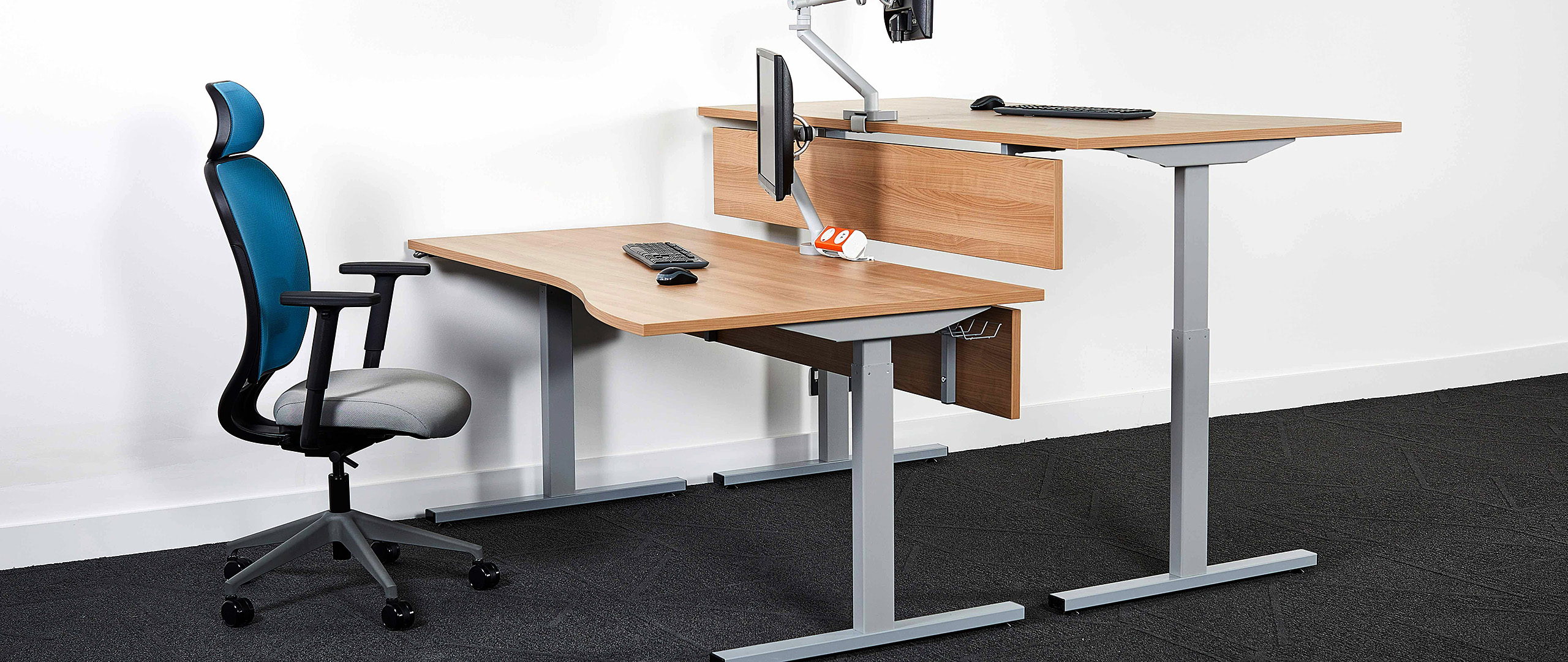
Power leads, monitor cables, cable trays and screens need to work throughout the full height range. Check where the sockets are and what happens when the surface rises. Make sure an under-desk drawer or adjacent cabinet will not obstruct the moving parts. Ask which accessories are included in the quote and which are optional.
Ask these questions before you order
- What are the stated height range and load limit?
- Which controls are included, and where are they positioned?
- Does the quoted size accommodate the equipment being used?
- How are cables, monitor arms and screens managed?
- What do delivery, installation and the warranty include?
- For paired desks, how does each surface move independently?
Consider the rest of the workstation
Changing desktop height does not settle every ergonomic question. Seating, screen position, lighting and the work routine still need consideration. DSE assessment advice can help identify the issues to review in the complete setup.
Send Pam your room dimensions, the equipment you use and the number of desks required. Our free planning and design service is a useful way to explore the layout before ordering.
Explore our height adjustable desks service.